Decentralized Federated Learning
Peer-to-peer and semi-decentralized learning systems where nodes collaborate without relying on a single central server.
Explore topicThis site loads optional analytics from Google and external analytics providers only if you accept. You can decline and continue using the site normally.
PhD candidate at the University of Murcia working on federated learning for cybersecurity and cyberdefense, with a focus on distributed, privacy-preserving and robust learning systems.
Applied research years
EU/defense programmes
University of Murcia PhD candidate
Citations

Spain
enriquetomas@um.es
Academic and professional profiles to follow scientific output, research identity, and technical activity.
The main lines I am currently working around, with a focus on distributed learning and security.
Peer-to-peer and semi-decentralized learning systems where nodes collaborate without relying on a single central server.
Explore topicLLMs used as a support layer to explain what is happening, compare mitigation options, and keep the analyst in the loop.
Explore topicEvaluation of robustness, explainability, accountability and reliability in machine learning systems used in security-sensitive settings.
Explore topicMachine learning applied to incident management, threat detection, IoT security and critical infrastructure monitoring.
Explore topicA short overview of my research output, funded project experience, public academic profiles, and applied work across cybersecurity, cyberdefense, and distributed AI.
Public scholarly footprint based on Google Scholar metadata available in the repository.
Work connected to European, defense, IoT security, emergency systems, and BCI security research contexts.
Work across distributed AI, cybersecurity, and privacy-preserving systems.
GitHub, LinkedIn, Scholar, ORCID, Scopus, DBLP, Web of Science, and ResearchGate.
Projects where I have worked on federated learning, distributed AI, security monitoring, cyberdefense, 6G security and resilient systems.

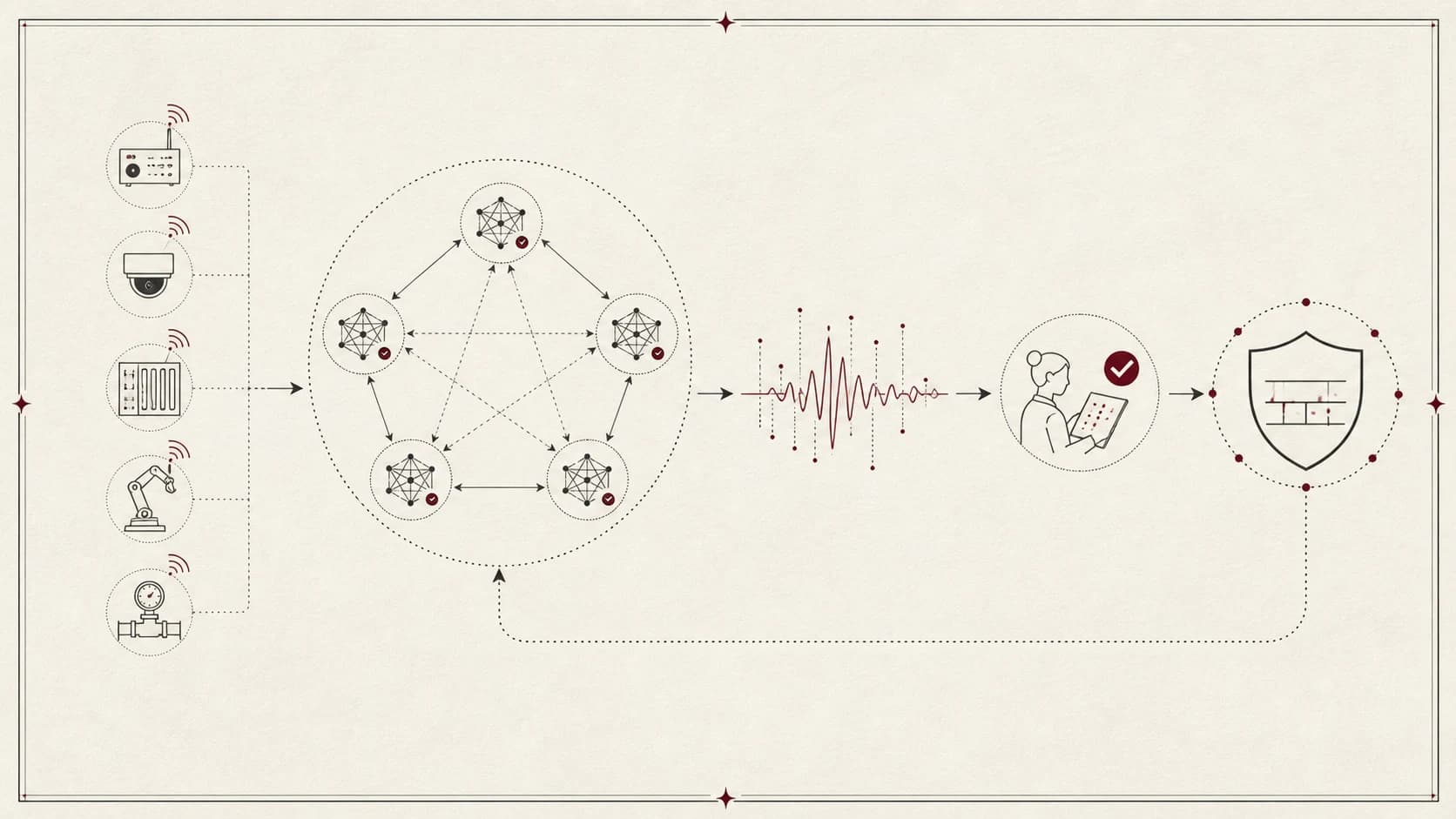
DEFENDIS develops a framework for uniquely identifying IoT devices in a distributed manner while solving security threats through decentralized federated learning.
Security problemIoT deployments need device identity mechanisms that remain useful when central services are unavailable, compromised, or unsuitable for sensitive telemetry.

A European research project on methods and proofs of concept for supporting cyber defence incident management.
Selected highlights from research in federated learning, distributed AI, communications security, trustworthy AI and cybersecurity.
Computer Networks
Enrique Tomás Martínez Beltrán, Eduard Gash, Gérôme Bovet, Alberto Huertas Celdrán, Burkhard Stiller
Decentralized Federated Learning (DFL) offers a scalable paradigm for collaborative intelligence at the edge, yet its practical efficacy is severely constrained by system heterogeneity. Traditional synchronous protocols...
Information Fusion
Enrique Tomás Martínez Beltrán, Gérôme Bovet, Gregorio Martínez Pérez, Alberto Huertas Celdrán
Submitted to Future Generation Computer Systems
Enrique Tomás Martínez Beltrán, Gérôme Bovet, Gregorio Martínez Pérez, Alberto Huertas Celdrán
Future Generation Computer Systems
Enrique Tomás Martínez Beltrán, Philip Giryes, Gérôme Bovet, Burkhard Stiller, Gregorio Martínez Pérez, Alberto Huertas Celdrán
Federated Learning (FL) offers a paradigm for collaborative AI that mitigates raw data exposure, yet the statistical heterogeneity of client data severely constrains its practical application. This non-independent and id...
XI Jornadas Nacionales de Investigación en Ciberseguridad (JNIC 2026)
Pedro Beltrán López, Enrique Tomás Martínez Beltrán, Pantaleone Nespoli, Manuel Gil Pérez, Gregorio Martínez Pérez, Alberto Huertas Celdrán
Notes on federated learning, decentralized AI, threat detection, explainability, applied cybersecurity, and occasional work with LLMs.
A practical note on how distributed monitoring, DFL models, alert evidence and LLM-based support can fit into a cyberdefense workflow.
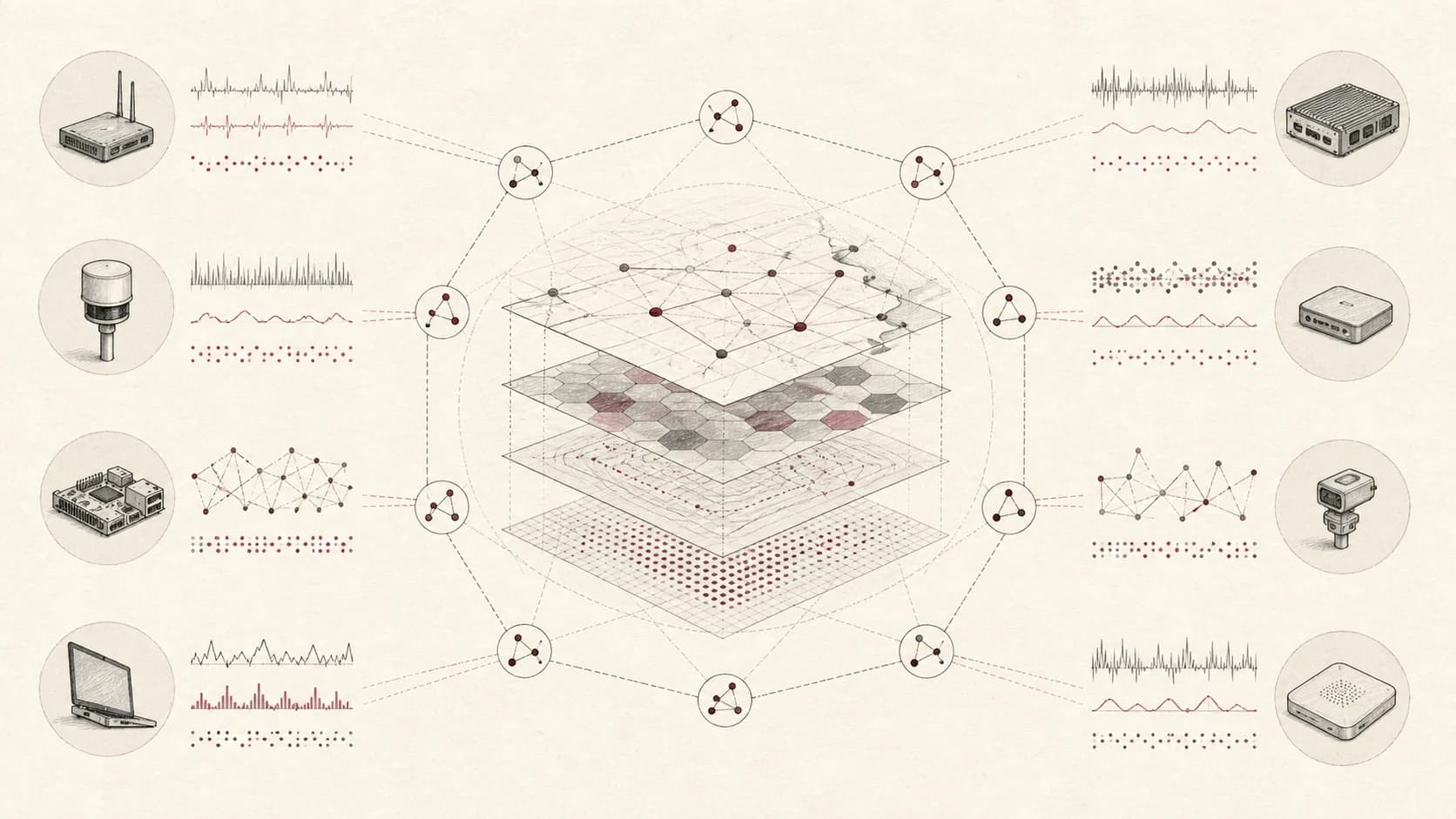
A research note on using DFL to turn distributed telemetry, anomalies and trust signals into cyberdefense situational awareness.
Open to research collaborations, European projects, invited talks, and applied work around federated learning, cyberdefense, privacy-preserving AI, and trustworthy security systems.
enriquetomas@um.esAffiliation
CyberDataLab · University of Murcia
Location
Spain